
Why Are Robots Superseding Conventional Palletising Machines?
Published 2021-11-23
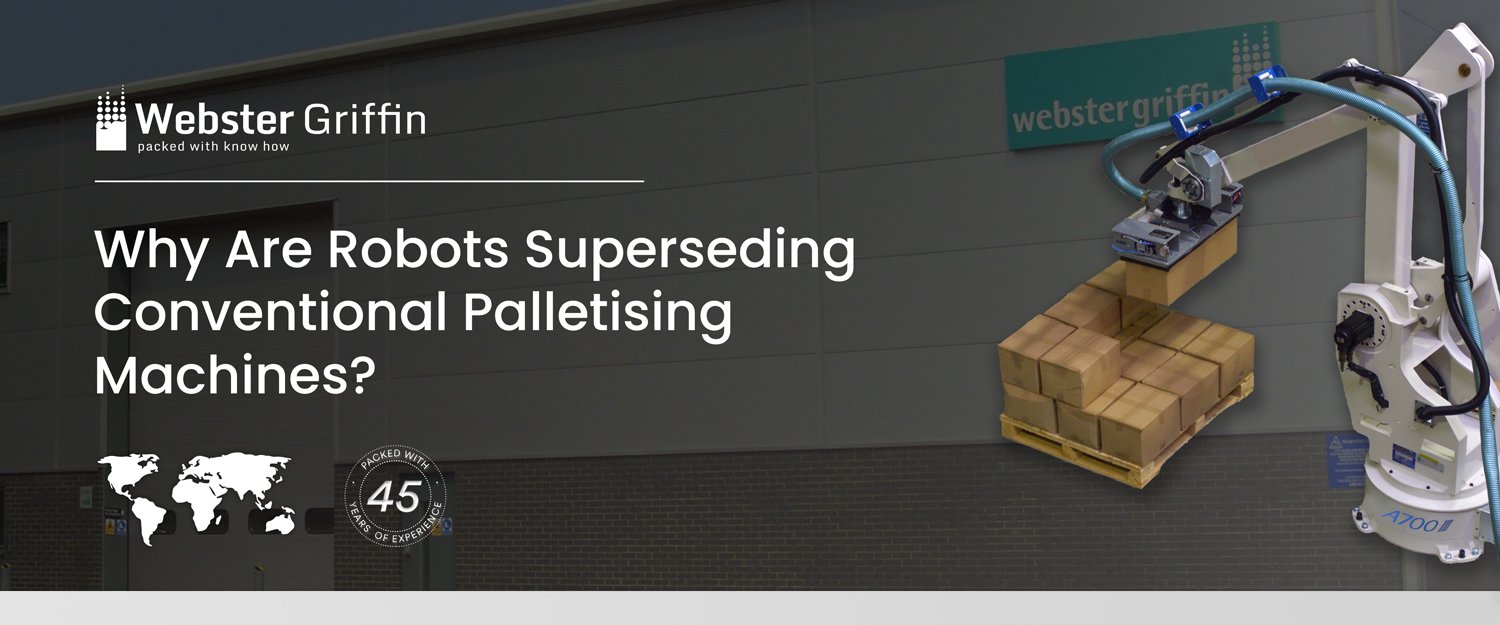
Does your warehouse, factory or order fulfillment/distribution centre use conventional palletisers for your product packaging? If so, you might be considering switching to a robot palletiser. It’s flexible and offers significant space and maintenance savings — which could help streamline your operations and make it more profitable. Its suitability for your business will depend on many factors, including your desired production rates and how many products you handle. To make an informed choice, here’s the difference between the two and why robot palletisers are now superseding conventional palletisers.
In short, conventional palletisers build layers, while robots are designed to pick up individual products one by one. Conventional palletisers transport the products using conveyors, It rotates, aligns, pushes and lifts them into rows until a product layer is formed.
The product layer is discharged onto a pallet and compressed if necessary. The process repeats until the pallet is full and is ready for shipping. Often, conventional palletisers include extras like a stretch wrapper or a stretch hooder.
Robot palletisers are also fed products via a conveyor, but they use a robotic bag hand or component to pick up and move products…
Bring the discussion to your application.
Describe your product, packaging, target output and site requirements. Our team can help you define the appropriate equipment and project scope.
Build your project brief